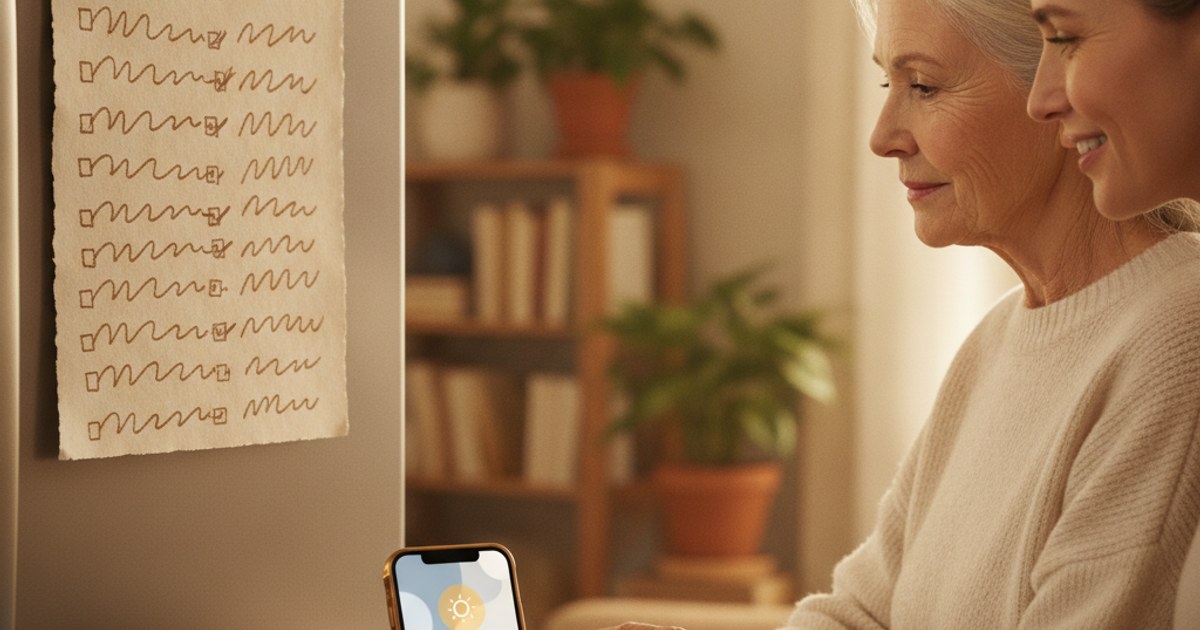
A handwritten chart taped to the fridge is one of the most common ways families track medication, and it's not a bad instinct, it's visible, it's simple, and it doesn't require learning anything new. But it has one structural weakness that a lot of families only notice after a dose gets missed: a chart only works if someone remembers to look at it.
AmberCap keeps the same simplicity as a paper chart, but adds the one thing paper can't do: an alert that fires whether or not anyone remembered to check it.
Try AmberCap free →The One Thing Paper Can't Do
A chart is passive, it sits there until someone decides to look. That's fine on a normal day, but the days medication actually gets missed are usually the days routine gets disrupted, a visitor, a bad night's sleep, a change in schedule, exactly the days someone is least likely to remember to check a piece of paper on the fridge. A reminder that fires on its own doesn't depend on the day going normally to work.
What a Chart Still Does Well
A paper chart is genuinely good at being visible at a glance, no unlocking a phone, no navigating a screen, just a look at the fridge. That's a real advantage for some households, especially early on. Rather than throwing it out immediately, many families keep the chart running alongside a new reminder app during the transition, letting trust in the app build up before retiring the paper version.
The Distance Problem a Chart Can't Solve
A chart only helps whoever can physically see it. For a family member who doesn't live in the house, or lives in another city entirely, a fridge chart provides zero visibility unless someone calls to read it out loud. An app with a family alert feature solves this directly, sending a notification to a linked family member automatically if a dose isn't marked taken, no visit and no phone call required.
Making the Switch Without Losing the Simplicity
The concern with moving off paper is usually that an app feels more complicated. In practice, the daily interaction should end up just as simple, tap one button when a reminder rings, the same motion as making a checkmark. The complexity, if any, is in the one-time setup, which is worth doing together rather than handing off instructions and expecting it to happen alone.
A Simple Way to Decide
- If no family member needs remote visibility, a chart alone may still be enough.
- If anyone in the family lives elsewhere and wants to know when doses are missed, an app's family alert is the piece paper can't provide.
- If routine disruptions have caused missed doses before, an active reminder closes that specific gap.
- Running both during a transition costs nothing and eases the switch.
Frequently Asked Questions
Is a paper chart on the fridge actually a bad way to track medication?
It's not bad, it's just fragile. It works as long as someone remembers to check it and mark it every single time, with no reminder if that doesn't happen and no record if the paper gets misplaced. It relies entirely on memory to use, which is the exact thing it's meant to help with.
What does an app actually add over a paper chart?
The reminder itself. A chart tells you what to take once you've already remembered to look at it. An app rings at the scheduled time whether or not anyone thought to check anything, which covers the actual moment someone is most likely to forget.
Can I keep the paper chart and add an app too?
Yes, plenty of families do exactly that during a transition, the chart stays as a visual backup while the app becomes the actual reminder mechanism. Over time most people find the chart becomes unnecessary once the app is trusted, but there's no harm running both at first.
What happens if a paper chart gets marked but the dose wasn't actually taken?
There's no way to catch that with paper, a checkmark is just as easy to make out of habit as an actual dose is to take. An app doesn't prevent someone from marking a dose they didn't take either, but it does timestamp exactly when it was marked, which a family member can compare against the actual schedule if something seems off.
Does a family member need to visit to check a paper chart?
Yes, that's one of its biggest limitations for anyone not living nearby, the chart is only useful to whoever can physically see it. A reminder app with family alerts solves this specifically, a family member gets notified automatically without needing to be in the house.
Is switching from paper to an app hard for someone used to the chart?
Less than expected if the app's daily interaction stays just as simple, one button to mark a dose taken. The setup is a bit more involved than taping a chart to the fridge, but the day-to-day use ends up simpler, not harder, once it's running.
Free for one medication, no card required. As simple as a fridge chart, with a reminder paper can't give you.
Get started with AmberCap →