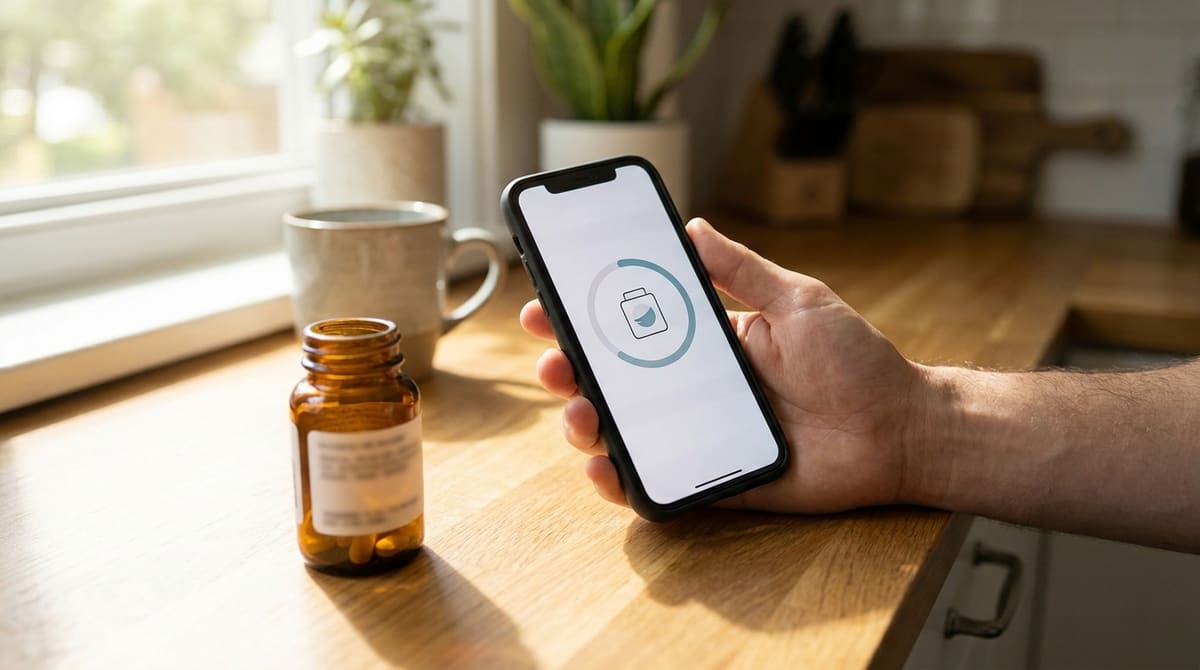
Antibiotics are one of the few prescriptions with a firm finish line, and the last few doses of a course are exactly the ones most likely to get skipped once symptoms have already faded. A medication reminder app that treats a 10-day antibiotic course the same as an ongoing daily prescription misses what actually makes this situation different.
Track a short antibiotic course all the way to the last dose.
Try AmberCap free →Why Feeling Better Isn't the Same as Finished
Symptoms usually fade well before an infection is fully cleared, which creates a gap where stopping feels reasonable but isn't. The remaining bacteria can recover once the medication stops early, sometimes returning stronger or more resistant the next time treatment is needed.
A Running Count Beats a Generic Daily Reminder
Seeing "4 of 10 doses remaining" carries different weight than a plain daily alert, since it frames the antibiotic as something already mostly completed rather than an open-ended routine. That framing alone makes the final stretch feel worth finishing instead of easy to quietly drop.
Free for one medication. Add the full course with Premium.
Get started with AmberCap →Spacing Matters as Much as the Clock
Some antibiotics depend on consistent spacing between doses, or specific timing around meals, to stay effective and avoid stomach upset. A reminder built only around fixed clock times can miss that nuance, similar to how as-needed medications also need something more flexible than a rigid daily alarm.
What Happens if a Dose Is Actually Missed Mid-Course
A single missed dose partway through a course is usually not the end of the treatment, but it is worth flagging clearly rather than quietly skipping ahead to the next scheduled time as if nothing happened. A visible missed-dose note keeps the full picture accurate by the time the course wraps up.
Why Leftover Antibiotics Are Their Own Problem
Stopping early usually leaves pills behind, and those leftovers have a way of getting saved "just in case" and taken later for an unrelated illness without a doctor's involvement. A reminder that tracks the course through to its actual end reduces the odds of a half-finished bottle sitting in a cabinet months later, waiting to be used the wrong way.
Setting the End Date the Moment the Prescription Starts
Entering the full course length on day one, rather than adding doses one at a time as they come up, gives the reminder app an actual finish line to count down toward from the start. That small setup step is what makes the "doses remaining" framing possible in the first place, instead of the course quietly turning into an open-ended routine by default.
Why the Final Dose Deserves Its Own Small Confirmation
Marking the very last dose of a course as something distinct, not just another entry in the list, gives a small sense of closure that a plain repeating reminder never provides. That might sound minor, but it's exactly the kind of detail that makes a course feel finished rather than simply abandoned once symptoms already cleared up days earlier.
Talking to a Pharmacist if the Course Gets Confusing
Some antibiotic courses change dose or frequency partway through, tapering down or switching timing as treatment progresses, which can make a simple fixed schedule feel wrong partway in. A quick call to the prescribing pharmacist to confirm the exact updated schedule, then entering that directly into the reminder, beats guessing at how to adjust it based on a half-remembered instruction from the original prescription.
Why Kids and Seniors Both Struggle With This the Same Way
Stopping a short antibiotic course early isn't specific to any one age group, it happens just as often with a child's prescription as with an older adult's, and for the same underlying reason: the symptoms that motivated finishing the course have already disappeared. A reminder app built around this exact pattern, a visible countdown toward a finish line, helps regardless of who the course belongs to, which is worth keeping in mind for a caregiver managing medications across multiple family members at once.
What a Completed Course Log Is Actually Good For Later
A finished antibiotic course, logged start to finish with dates and any missed doses noted, becomes useful medical history well beyond the illness itself. If the same infection resurfaces months or years later, having an accurate record of exactly which antibiotic was used and whether the full course was actually completed gives a new prescriber real information instead of a vague recollection of "I think I finished it that time."
That same log is useful for tracking any side effects noticed during the course too, which matters if the same antibiotic ever comes up as an option again and a prescriber needs to know whether it was well tolerated the first time around. That small note, made once at the time it happened, is far more reliable than trying to reconstruct the same detail from memory years later.
Disposing of Leftover Pills the Right Way
If a course does end up with leftover pills, most pharmacies and some police stations offer a take-back program specifically for unused medication, which is a safer route than tossing them in household trash or flushing them. A reminder app that helps a course actually finish reduces how often this comes up in the first place, but it's worth knowing the safe disposal option exists for the times it doesn't, rather than letting unused pills sit in a cabinet indefinitely, forgotten, or disposing of them in a way that isn't actually safe for the household, the water supply, or anyone else in the household who might unknowingly come across them later without knowing exactly what they are or why they were left behind.
Frequently Asked Questions
Why is stopping antibiotics early actually risky?
Feeling better doesn't mean the infection is fully cleared, and stopping early can let the remaining bacteria recover, sometimes coming back stronger or more resistant to the same medication next time it's needed.
How is a short antibiotic course different from a daily chronic medication?
A chronic medication repeats indefinitely, so a missed dose here or there gets absorbed into an ongoing routine. A short course has a hard end date, and the last few doses are exactly the ones people are most likely to skip once symptoms have already faded.
Should a reminder for antibiotics look different from a regular medication reminder?
Showing a running count, like "4 of 10 doses remaining," gives a clearer sense of progress than a generic daily reminder does, and it makes skipping the final doses feel more like abandoning something already mostly finished.
What about antibiotics that need to be taken with food or at specific spacing?
Some antibiotics need consistent spacing between doses, or specific timing around meals, to stay effective and avoid stomach upset. A reminder that accounts for that spacing is more useful than one built only around fixed clock times.