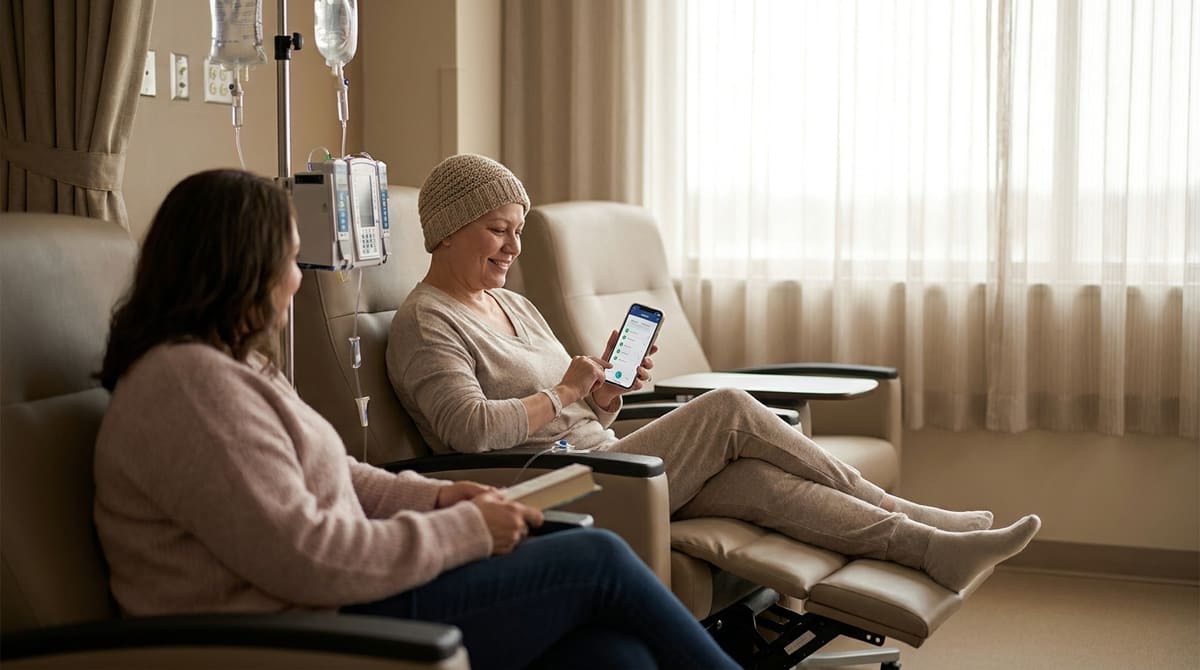
Chemotherapy rarely runs on the same rhythm every day. A cycle might mean three active treatment days followed by more than a week of rest, with anti-nausea medication, steroids, and other supporting prescriptions all timed around the infusion date rather than a repeating daily clock. A medication reminder app built for one steady routine doesn't fit that pattern well without some adjustment.
Build a schedule around your chemo cycle, not just a fixed daily clock.
Try AmberCap free →Why Chemo Timing Is Different From a Daily Prescription
Most chronic medications repeat the same way every day, which is exactly what a standard reminder is built for. A chemo cycle instead has active days, tapering days, and rest days, each potentially carrying a different set of medications, so the schedule itself needs to change with the calendar rather than stay fixed.
Anti-Nausea Timing Matters More Than It Seems
Anti-nausea medication generally works far better taken ahead of symptoms than after they start, which makes a reliable, on-time reminder more than a convenience during active treatment days. This is a similar principle to why timing matters so much for as-needed PRN medications generally, just with a narrower and more predictable window around each infusion.
Free for one medication. Add the full cycle schedule with Premium.
Get started with AmberCap →Rebuilding the Schedule Each New Cycle
Because most chemo protocols follow a known pattern handed out by the oncology team, the reminder schedule can be rebuilt around each cycle's start date instead of treated as a single unchanging routine. A few minutes spent updating it at the start of each cycle keeps it matching reality instead of drifting out of sync.
Why Family Alerts Matter More During Treatment
Chemo-related fatigue and brain fog can affect memory and follow-through even in someone who's normally on top of their own schedule without help. Turning on family alerts specifically during active treatment adds a layer of backup for exactly the stretch when it's needed most.
Tracking Symptoms Alongside the Schedule
Chemo side effects tend to follow a rough pattern within each cycle, worse on certain days and milder on others, and having a written record of when supporting medications were actually taken makes it far easier to have a useful conversation with the oncology team about what's working and what isn't. A vague memory of "I think I took it" is a much weaker starting point than an actual log.
Coordinating Between the Patient and a Caregiver
Active treatment days often involve a caregiver present for appointments and a patient managing medications alone the rest of the time, so a shared view of the schedule between both people avoids the awkward gap of neither one being sure whether a dose already happened. A single source of truth for the schedule removes most of that back-and-forth guessing entirely.
Building In Rest-Day Reminders Too, Not Just Treatment Days
It's easy to focus a reminder schedule entirely around active treatment days and let rest days slide, but some supporting medications, hydration reminders, or follow-up bloodwork appointments still fall on those quieter days and are just as easy to lose track of once the immediate urgency of an infusion day has passed. Building the full cycle into the schedule, rest days included, keeps nothing quietly slipping through simply because it felt like a lower-priority day.
When to Loop in the Oncology Nurse Line
A missed anti-nausea dose that leads to a rough few hours is worth mentioning to the oncology team at the next check-in, but a pattern of repeated missed doses, or real confusion about which supporting medication goes with which cycle day, is worth a call to the nurse line directly rather than waiting for the next scheduled appointment. A clear, exported log of exactly what was and wasn't taken makes that call faster and more useful for whoever answers it.
Multiple Prescribers Make a Single Schedule More Valuable
Cancer treatment often involves an oncologist, a primary care doctor, and sometimes a separate pain management or palliative care provider, each prescribing something that needs to fit into the same day without silently conflicting or overlapping. A single schedule that all of these medications sit inside together makes it far easier to spot a scheduling conflict or a duplicate before it becomes a real problem, rather than relying on the patient to mentally reconcile instructions coming from several different sources.
Adjusting for Fatigue, Not Just Nausea
Fatigue during active treatment days can make even a simple reminder feel like one more demand on very limited energy, so keeping the confirmation step as short and low-effort as possible matters more during chemo than it might for a healthier stretch of someone's life. A single tap or a short voice confirmation, rather than a longer interaction, respects how little energy might genuinely be available on the hardest days of a cycle.
If a caregiver is handling confirmations on behalf of a patient too fatigued to do it themselves on a given day, that's a reasonable adjustment, not a failure of the system. The goal throughout treatment is an accurate record of what was actually taken, not insistence on exactly who does the tapping. Noting in the log who actually confirmed a given dose keeps that record honest without making it a point of friction between patient and caregiver. This kind of shared, low-friction logging matters most on exactly the days fatigue is highest, which is usually right when it would otherwise be skipped entirely, and when an accurate record matters most for the oncology team's next decision about adjusting the treatment plan going forward, rather than relying on a rough, fading memory of how the last treatment cycle actually went, weeks or months after the fact, when small details tend to blur together.
Frequently Asked Questions
Why doesn't a simple daily alarm work well during chemotherapy?
Chemo schedules are usually cyclical, active days followed by rest days, with anti-nausea and other supporting medications timed around specific infusion dates rather than repeating every day the same way. A fixed daily alarm doesn't reflect that pattern.
What medications actually need the tightest timing during a chemo cycle?
Anti-nausea medications are often the most time-sensitive, since taking one after nausea has already started is far less effective than taking it ahead of schedule. Steroids and other supporting medications can also have specific windows tied to infusion day.
How do you update a reminder app between chemo cycles?
Most cycles follow a known protocol handed out by the oncology team, so the schedule can be rebuilt around each new cycle's start date rather than left as a single unchanging routine that assumes every week looks the same.
Should family get alerts during chemo, even for an adult who's usually independent?
It's worth turning on during active treatment specifically, since fatigue and brain fog from chemo can affect memory and follow-through even in someone who's normally reliable about their own schedule.